WD-40 on Car Body Rust: What It Can (and Can’t) Do
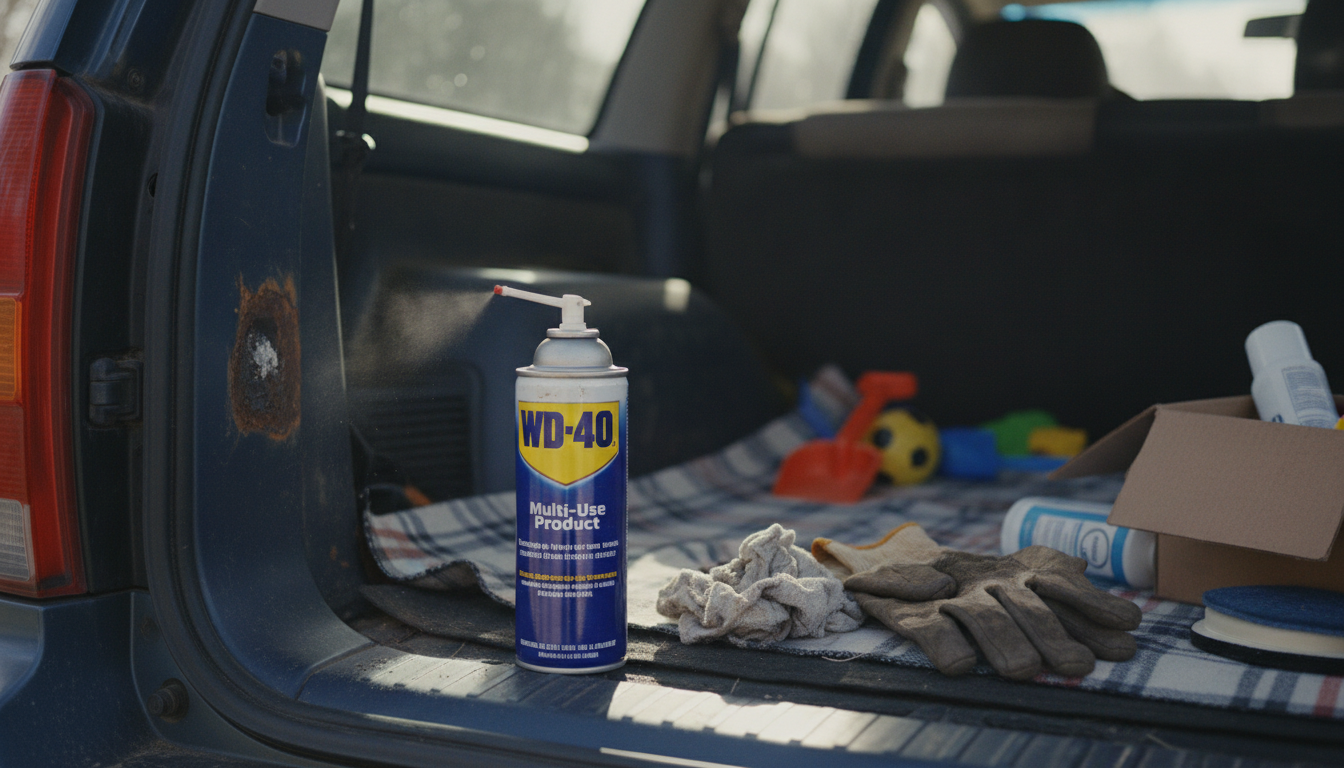
Can WD-40 remove rust from car body?
WD-40 can help loosen light surface rust on a car body, but it’s not a true rust remover and it won’t fix rust that’s already pitted the metal or spread under the paint. Think of it as a short-term helper: it can displace moisture, soften grime, and make it easier to wipe away superficial oxidation—especially on exposed metal edges, hardware, or small spots where the paint has already chipped.
When WD-40 works (and when it doesn’t)
If you’re dealing with a faint orange haze on bare metal, WD-40 may reduce the appearance after scrubbing with a microfiber cloth or a non-scratch pad. But if the rust feels rough, flakes, bubbles the paint, or returns quickly, WD-40 won’t stop the corrosion. Rust on body panels often grows under paint and clearcoat, so the real damage may be larger than what you see on the surface.
How to use WD-40 safely on a car body
Start by washing and drying the area so dirt doesn’t grind into the paint. Spray a small amount onto a cloth (instead of directly onto the panel), then gently rub the rusted spot. Wipe clean and inspect. If the rust remains, step up to proper rust treatment rather than continuing to scrub and risk thinning clearcoat. Avoid soaking seams, trim edges, and areas near fresh paint—overspray can leave residue that interferes with future primer, paint, or sealants.
What to do after you’ve loosened surface rust
Even if WD-40 improves the look, it doesn’t create a durable protective barrier. The important part is sealing the area so oxygen and moisture can’t keep feeding corrosion. For a practical, step-by-step approach to catching rust early, repairing it, and protecting the panel afterward, follow this guide: https://enamorica.com/guide-stop-car-rust-early-repair-seal-protect/.
FAQ
What’s the best way to stop rust from coming back after cleaning it?
Remove loose rust, treat the metal with a rust converter or remover if needed, then prime, paint, and seal the area so moisture can’t reach the metal again. If the rust is in a seam or has bubbled paint, addressing it early and fully is key to preventing a repeat.














Leave a comment