Types of Emergency Funds: Cash, Checking, HYSA & Tiers
What are the types of emergency funds?
Emergency funds generally fall into a few practical “types” based on how quickly you can access the money and what the dollars are meant to cover. Using more than one type at the same time is common, since it balances speed, safety, and earning potential.
Cash-on-hand (immediate-access fund)
This is the smallest, fastest layer: physical cash kept at home or in a secure place for situations where cards, ATMs, or mobile payments aren’t available (power outages, travel disruptions, urgent cash-only needs). Because of theft and loss risk, many people keep this amount limited to a few days of essentials.
Checking buffer (same-day fund)
A checking-account cushion acts like shock absorption for surprise bills, timing mismatches, or a larger-than-expected expense. It’s highly accessible but typically earns little, so it’s best used as a small “front line” rather than the entire emergency fund.
High-yield savings emergency fund (core fund)
This is the most common main emergency fund: money parked in a high-yield savings account (HYSA) or money market deposit account where it stays liquid and FDIC/NCUA-insured (within limits). It’s designed for true emergencies like medical bills, car repairs, or sudden income gaps, without taking market risk.
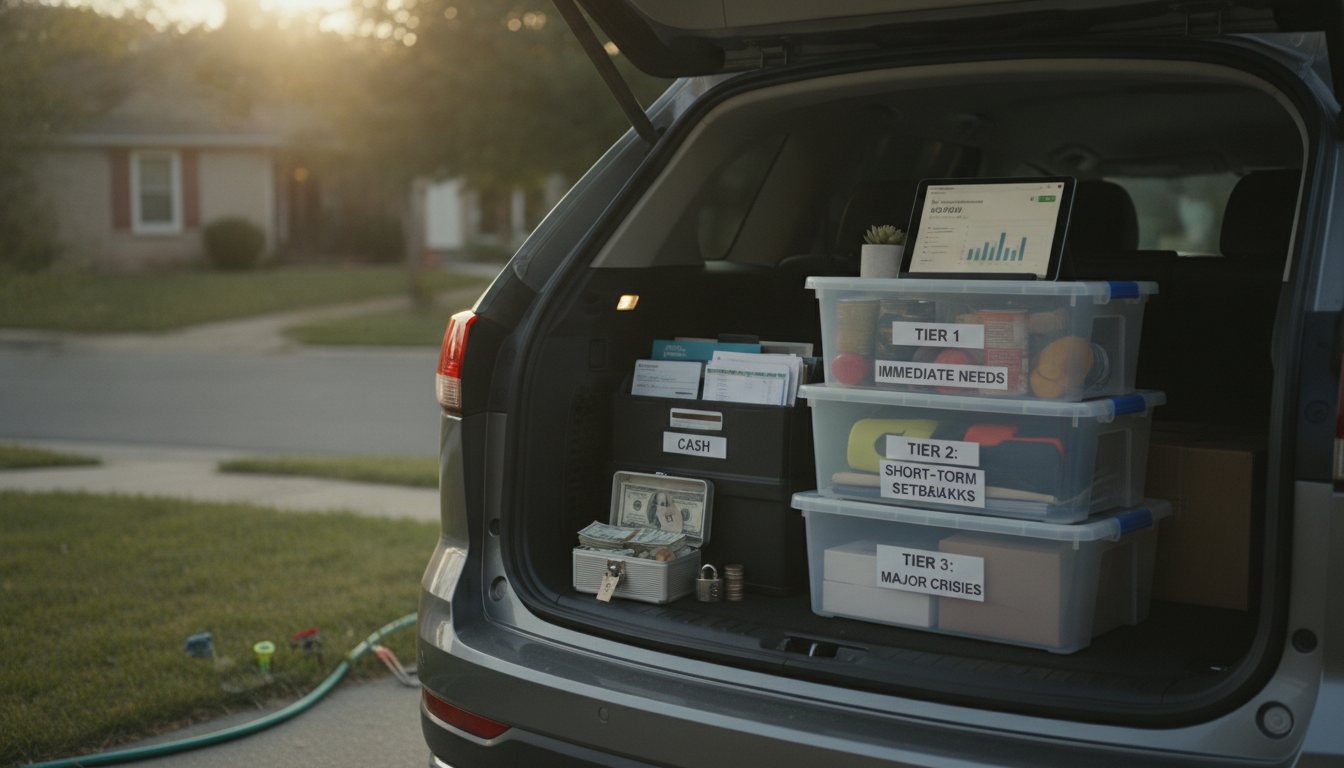
Tiered emergency fund (multi-layer setup)
A tiered setup splits your emergency money into layers: a small amount for instant access, a larger core in savings, and a “back layer” that may take a bit longer to reach but can earn more. This structure helps avoid tapping investments too early while still keeping meaningful cash available when life happens.
Income-replacement reserve (job-loss fund)
Some people treat job loss as a separate category and build a dedicated reserve that covers several months of necessities. This fund is often kept very safe and liquid, since needing it could coincide with broader economic stress.
For a practical breakdown of where each layer can live and how to set up a tiered system, see this guide to the best places to keep an emergency fund.
FAQ
How much should you keep in an emergency fund?
A common target is 3–6 months of essential expenses, but the right amount depends on income stability, household size, and how variable your bills are. Many people start with a smaller “starter” fund and build up over time.
















Leave a comment