Solar Panel Charging Speed: Time to Fill a Power Station
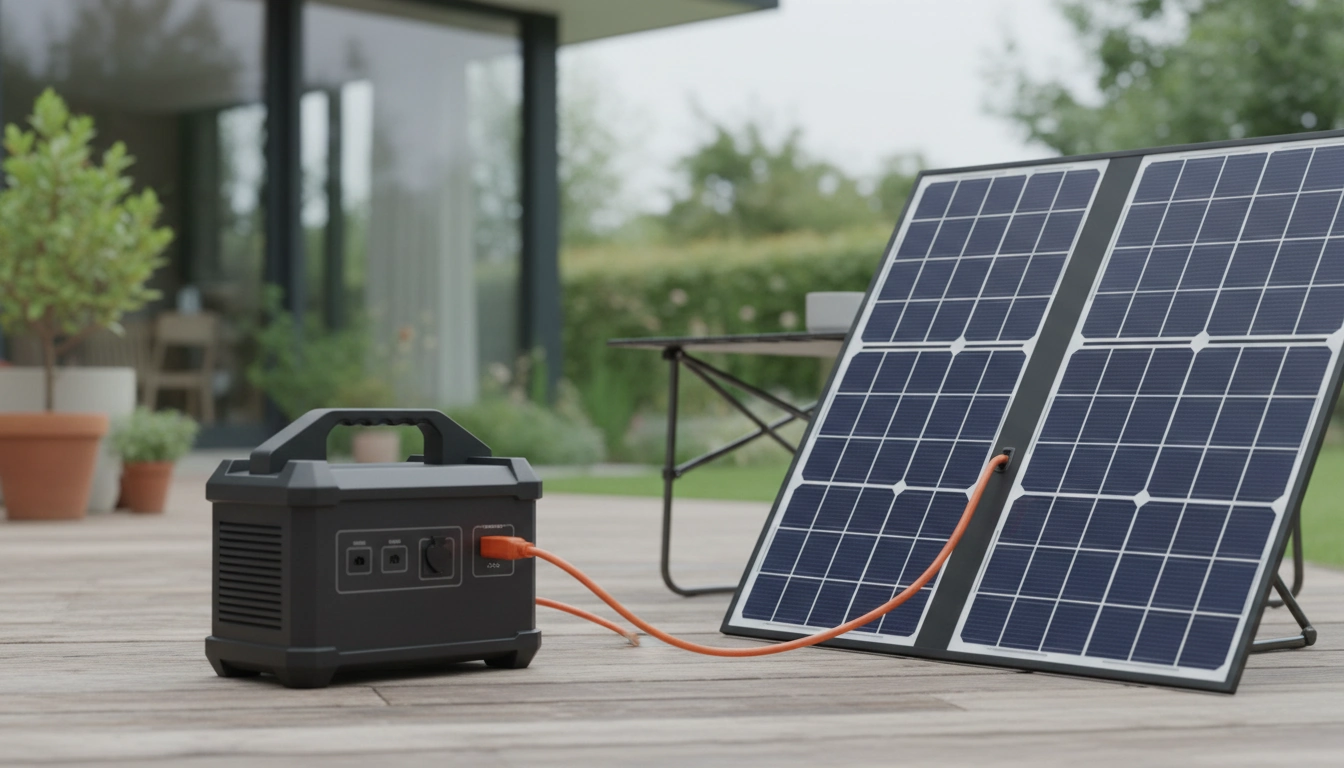
How fast can a solar panel charge a power station?
Charging speed depends on three numbers working together: the solar panel’s real-world wattage, the power station’s input limit, and how much energy the battery holds. As a practical rule, charge time (hours) is roughly battery capacity (watt-hours) ÷ average solar input (watts), then add extra time for conversion losses and fluctuating sunlight.
What affects solar charging speed the most?
Panel output in real sunlight
A “100W” panel rarely delivers 100W continuously. Midday summer sun with good angle might average 60–90W; hazy skies or poor alignment can drop output sharply. Tilting the panel toward the sun and keeping it unshaded usually has a bigger impact than most people expect.
Power station solar input limit
Many portable units cap solar input (for example, 100W, 200W, or higher). If your station only accepts 100W, adding panels beyond that won’t speed charging. Always match total panel wattage (and voltage) to what the station can safely take.
Battery size and efficiency losses
Higher-capacity batteries take longer to fill. Also, expect losses from heat and power conversion—often 10–25%—so real charge time is longer than simple math suggests.
Typical charging-time examples
With a 200Wh power station and an average 80W solar input, a full charge might take about 200 ÷ 80 = 2.5 hours, then ~3–3.5 hours after losses and changing sun. If the same unit averages 40W (morning/afternoon or light clouds), expect closer to 5–6+ hours.
For a deeper look at a compact setup and what “fast charging” looks like in practice, see the main guide here: 204Wh/300W Portable Solar Power Station Fast Charging Guide.
For Solar Panel Charging Speed: Time to Fill a Power Station, the best answer depends on fit, material, care instructions, and how the product will be used day to day.
FAQ
Can you use a solar panel while the power station is in use?
Yes, most power stations can charge from solar while powering devices, but total performance depends on input watts versus your load. If your devices draw more than the panel provides, the battery will still drain, just more slowly.














Leave a comment