10-Min Smart Self-Care Tracker for Steady Wellness
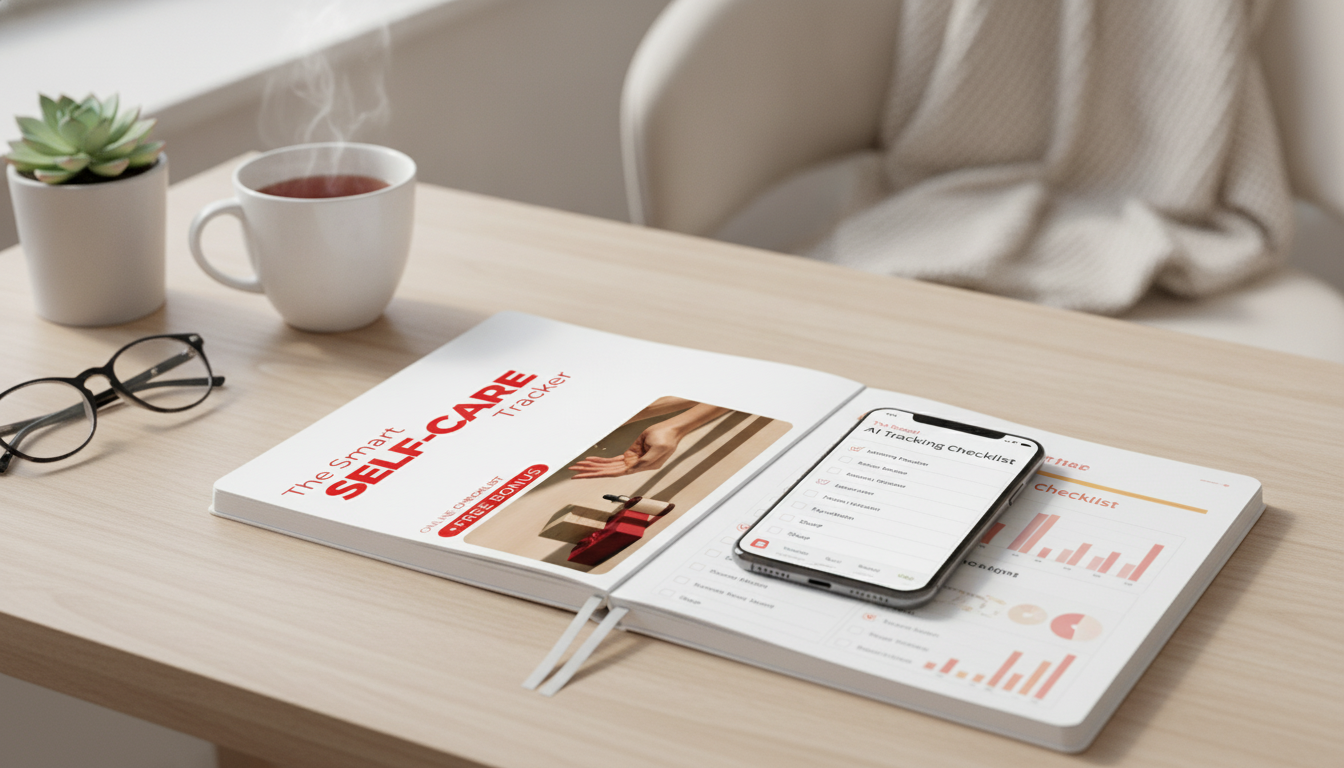
The Smart Self-Care Tracker: A Simple System for Consistent Wellness Habits
Consistency is often the hardest part of self-care: not knowing what to do, doing too much at once, or losing track after a busy week. A structured tracker with AI-guided checklist flow helps turn self-care into a repeatable routine by clarifying priorities, reducing decision fatigue, and making progress visible day to day.
Instead of trying to “do everything,” the goal is to choose a small set of actions that protect your energy and health—then use a quick daily check-in to keep those actions steady, even when life gets busy.
Why self-care routines break down (and how tracking helps)
Most routines don’t fail because motivation disappears; they fail because the plan is too hard to run on real-life days.
- Decision fatigue: too many options can lead to skipping basics like hydration, movement, or a sleep wind-down.
- All-or-nothing planning: overly ambitious routines tend to collapse when one day is missed.
- Invisible progress: without a record, small wins (like a steadier bedtime window) are easy to overlook.
- A feedback loop beats willpower: pick a few actions, check them off, review patterns, and adjust—without guilt.
Tracking turns self-care from a vague intention into something concrete: a short list you can complete, learn from, and refine. If you want credible guidance for health foundations, the World Health Organization’s overview of self-care is a helpful reference point for why daily basics matter.
What makes The Smart Self-Care Tracker different
Many trackers feel like a second job. The difference here is simplicity: it’s designed to support consistency, not perfection.
- AI-guided checklist structure: supports daily follow-through without overcomplicating the routine.
- Built for habit-building: prioritizes repeatable actions over intensity.
- Works across wellness areas: physical basics, mental resets, emotional support, and lifestyle upkeep can live in one place.
- Fast to use: a few minutes to plan, check in, and reflect—without extensive logging.
If you want a ready-to-use system, The Smart Self-Care Tracker: AI Tracking Checklist for Self Care Consistency, Habits & Wellness is designed for quick daily checkoffs and pattern-spotting—especially useful when stress makes decisions feel heavier than they should.
Core categories to track for balanced wellness
Balanced wellness tends to be “boring basics” done consistently. A tracker helps you distribute attention so one area (like productivity) doesn’t quietly crowd out sleep, nourishment, or connection.
- Foundations: sleep consistency, hydration, nourishing meals, medication or supplements (if applicable). For sleep education and practical guidance, see the CDC’s sleep resources.
- Body care: gentle movement, stretching, posture breaks, time outdoors, recovery days.
- Mind care: journaling, breathing breaks, attention resets, limiting doom-scrolling. The American Psychological Association’s stress hub offers a useful lens on why small regulation practices work.
- Emotional care: boundary setting, social connection, self-compassion, noting mood triggers.
- Environment care: tidying a small zone, laundry baseline, prepping for tomorrow to reduce friction.
- Personal growth: reading, learning, therapy homework, skill practice in manageable doses.
Environment care is often overlooked, but it’s a quiet multiplier: a calmer space reduces background stress. If you like turning small resets into something visually satisfying, consider a simple “reset station” (keys, water bottle, supplements, planner). A decorative surface like Luxury Iridescent Shell Placemats – Handmade Nordic Round Decorative Tray can make that station feel intentional—so the habit is easier to repeat.
A weekly rhythm that keeps habits realistic
Weekly structure prevents the common trap of trying to “catch up” after a missed day. The focus is continuity: fewer decisions, smaller actions, steadier outcomes.
Example checklist structure for consistent self-care
| Category | Daily Minimum (5–10 min) | Bonus Option (10–30 min) | When to Choose It |
|---|---|---|---|
| Sleep | Same bedtime window | Screen-free wind-down routine | When mornings feel rough or energy dips |
| Movement | 10-minute walk or stretch | Strength or class session | When stress is high or focus is low |
| Nutrition | Add protein + water | Prep one healthy meal/snack | When cravings spike or schedule is packed |
| Mental reset | 2-minute breathing break | Journal or guided meditation | When anxious, scattered, or overstimulated |
| Connection | Send one message | Plan a call/meet-up | When mood drops or isolation increases |
| Environment | Clear one surface | 15-minute tidy timer | When clutter starts to affect calm |
How to use the tracker in 10 minutes a day
If you’re already using AI checklists for other parts of life, pairing personal care with practical systems can be surprisingly calming. For example, pet routines can create extra mental load; AI-Powered Pet Care Comparisons | Smart Checklist for Smarter Choices helps streamline decisions so your attention isn’t spread thin.
Who this is best for (and who may want a different approach)
Getting started with The Smart Self-Care Tracker
For a lightweight, structured start, The Smart Self-Care Tracker works especially well when you commit to “minimums first” and let bonus actions be optional—not required for a successful day.
FAQ
How many habits should be tracked at once for better consistency?
Start with 3–5 daily minimums and keep them easy enough to complete on your busiest day. Add optional “bonus” habits only after the baseline feels natural for at least a week.
What if a day is missed—does the tracker still help?
Yes—missed days are useful feedback. Treat the miss as a signal to simplify the checklist, switch to maintenance mode if needed, and restart with the smallest action that rebuilds momentum.
Is an AI-guided checklist useful if routines are already established?
It can be, especially during stressful seasons. It helps spot patterns, balance categories (sleep, movement, connection), and refine priorities so established habits stay sustainable instead of sliding into burnout.















Leave a comment