Best Retro Microwave: Top 0.7 cu ft 700W Pick
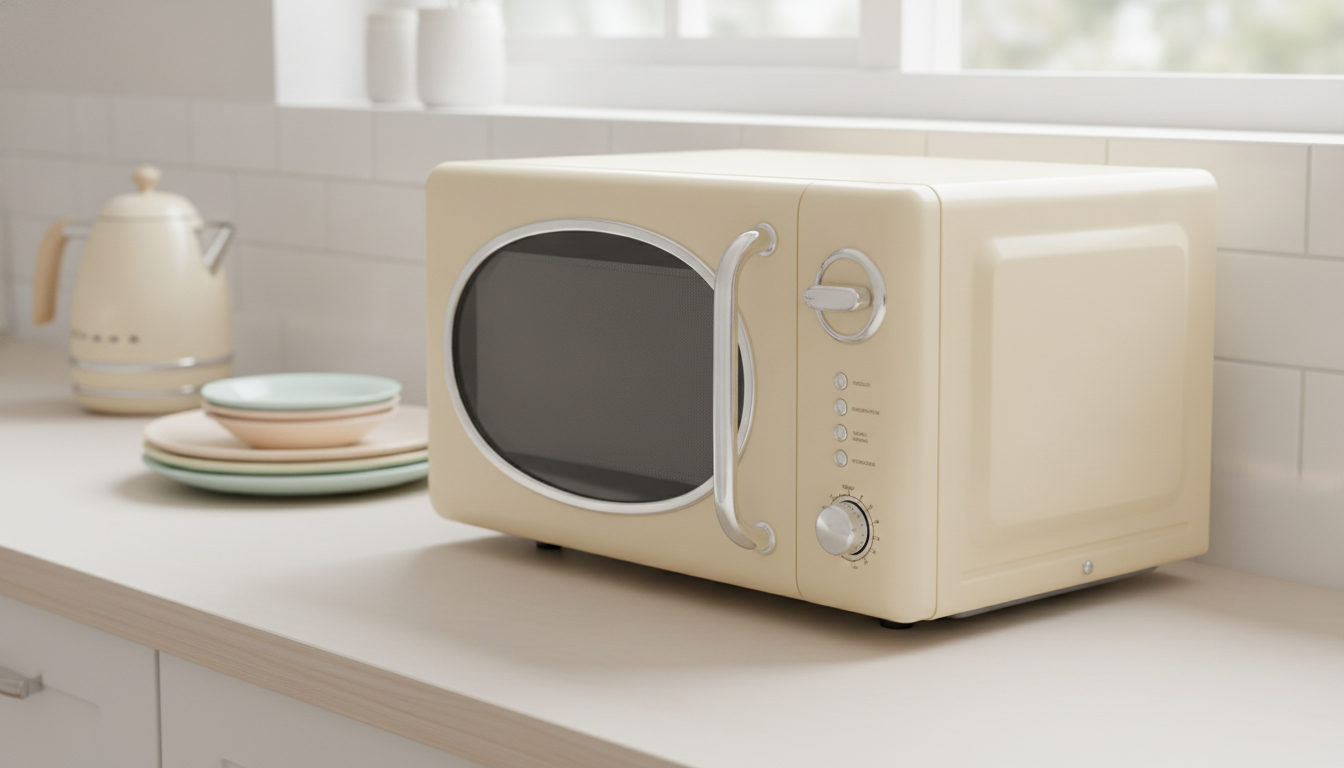
What is the best retro microwave?
The best retro microwave is the one that nails the vintage look while still handling everyday reheating quickly and evenly. For most kitchens, a compact retro model around 0.7 cu. ft. with 700 watts hits the sweet spot: it fits on smaller counters, feels period-correct, and still has enough power for coffee, leftovers, popcorn, and simple frozen meals.
A strong pick in that “best overall” lane is a 0.7 cu. ft., 700W retro microwave with a digital display and straightforward presets. The digital controls make it easier to get consistent results than old-school dials, while the retro exterior keeps the throwback vibe front and center. The right unit should also feel solid when you open the door, have a stable turntable, and offer multiple power levels for gentler heating (like softening butter) as well as higher power for quick reheats.
What to look for in a great retro microwave
Size and capacity: 0.7 cu. ft. works well for small plates and bowls; go larger only if you regularly heat bigger dishes. Wattage: 700W is common in compact retro designs; it’s fine for typical tasks but may take a bit longer than 900–1100W models. Controls: A digital display with clear buttons usually means fewer “overcooked edges, cold center” surprises.
Everyday usability: Look for quick-start options, a readable timer, and an interior that wipes clean without fuss. Noise and stability: A smoother turntable rotation and a door that closes cleanly can make the microwave feel higher-end, even at a smaller size.
A practical recommendation
If a compact footprint and authentic retro styling are priorities, a 0.7 cu. ft., 700W digital-display retro microwave is a top choice for most shoppers—especially in apartments, offices, dorms, or secondary kitchens. For a closer look at features, controls, and what to expect day to day, see the full guide here: https://enamorica.com/guide-retro-0-7-cu-ft-700w-microwave-digital-display-guide/.
FAQ
Is a 700W microwave powerful enough for daily use?
Yes—700W handles reheating, defrosting, and simple cooking reliably, though it can take a little longer than higher-watt models. Using the right power level and stirring midway helps improve evenness.














Leave a comment