Modern Ceramics: Materials, Additives, and Types
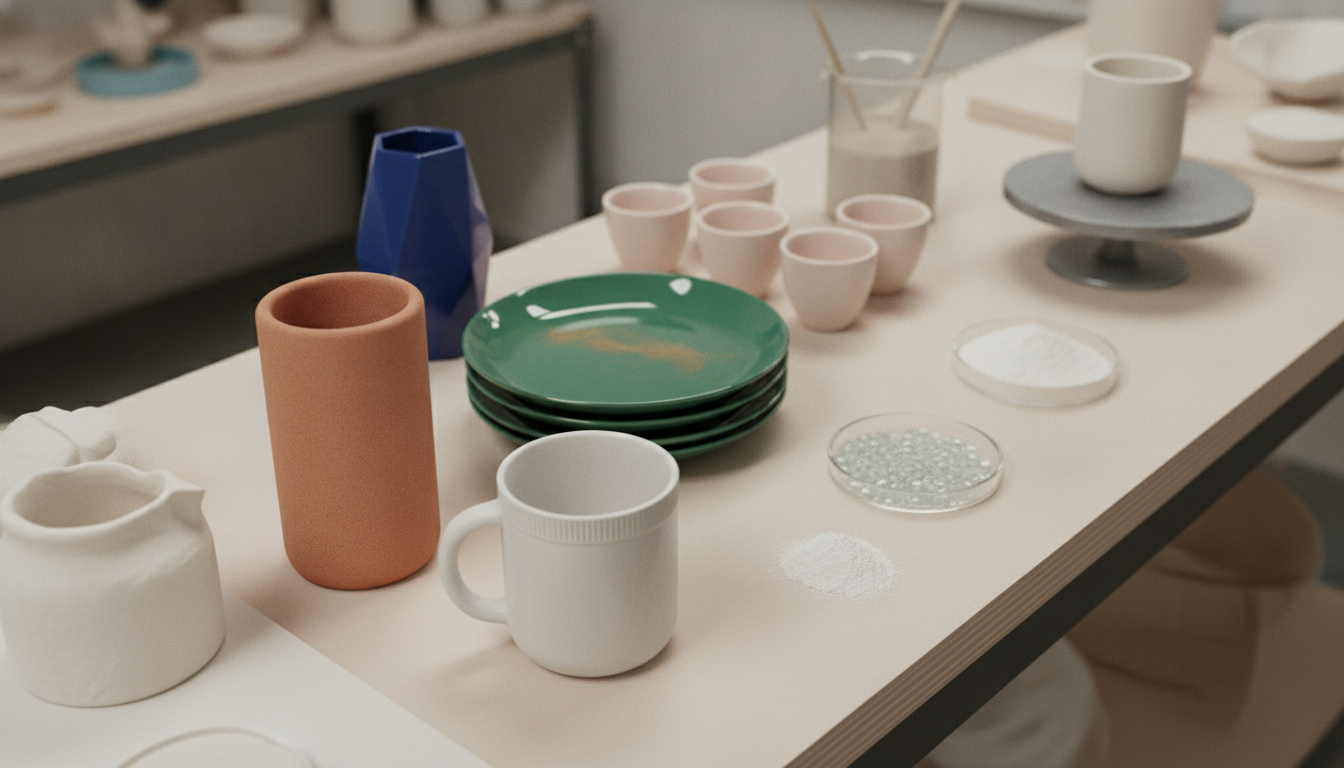
What are modern ceramics made of?
Modern ceramics are made from carefully engineered mixtures of inorganic, non-metallic materials that are shaped and then hardened—usually by high heat (sintering) or chemical bonding. Unlike traditional pottery that relies heavily on natural clays, many modern ceramics use refined powders and additives to achieve specific properties like extreme hardness, electrical insulation, heat resistance, or biocompatibility.
At the core, most modern ceramics start with ceramic powders such as alumina (aluminum oxide), zirconia (zirconium dioxide), silica (silicon dioxide), or silicon carbide. These powders may be blended to tune performance—zirconia can boost toughness, while alumina is valued for wear resistance and stability. In many products, the “recipe” is as important as the base material, since tiny changes in particle size, purity, and ratios can affect strength and durability.
To make powders workable, manufacturers add binders (to hold particles together before firing), plasticizers (to improve forming), dispersants (to prevent clumping), and sometimes colorants or opacifiers. After shaping—by pressing, extrusion, slip casting, injection molding, or 3D printing—the piece is heated so particles fuse into a dense solid. Some advanced ceramics also receive surface treatments or glazing for improved chemical resistance, aesthetics, or easier cleaning.
Modern ceramics typically fall into a few broad families:
- Oxide ceramics (like alumina and zirconia): widely used for wear parts, dental restorations, and insulating components.
- Non-oxide ceramics (like silicon nitride and silicon carbide): chosen for high-temperature, high-stress applications.
- Glass-ceramics: materials that start as glass and are heat-treated to form crystals, balancing strength and thermal stability.
- Composite ceramics: mixes of ceramics (and sometimes fibers or whiskers) engineered for toughness or thermal shock resistance.
For a deeper breakdown of materials and how they’re processed, see the full guide here: https://enamorica.com/what-are-modern-ceramics-made-of/.
FAQ
What’s the difference between traditional clay ceramics and advanced ceramics?
Traditional ceramics are usually clay-based and formulated for general-use strength and appearance, while advanced ceramics rely on high-purity powders like alumina or zirconia to deliver targeted properties such as extreme wear resistance, heat tolerance, or electrical insulation.
















Leave a comment