Solo Drive Reset: 20–40 Minutes to Calm and Clarify
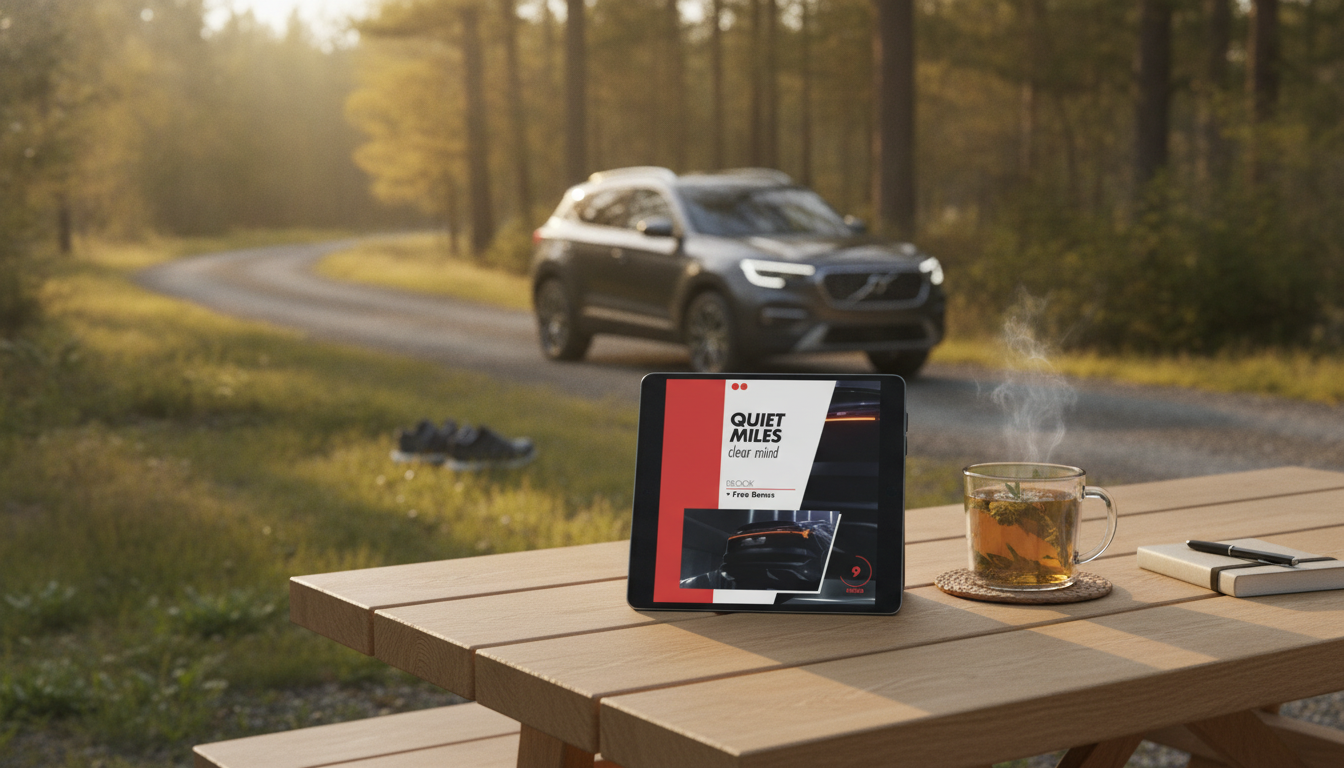
Quiet Miles, Clear Mind: A Simple Solo-Drive Practice to Calm Your Nervous System and Find Clarity
A solo drive can be more than transportation—it can be a structured, low-pressure way to downshift stress, reset your mood, and create enough mental space to think clearly. With a few boundaries and a repeatable “route ritual,” the car becomes a contained environment where your attention has a steady anchor (the road) while your nervous system gets a chance to settle.
Why a Solo Drive Can Feel So Regulating
Many people notice that driving alone feels surprisingly grounding. Part of that is sensory predictability: the steady hum of the engine, consistent visual flow, and a familiar seat-and-wheel setup can be less overwhelming than crowded rooms or constant conversation.
Forward motion also matters. Gentle movement and “going somewhere” can support emotional processing—especially when your mind is stuck replaying a situation. And because a drive has a clear start and finish, it creates a temporary boundary from demands: fewer interruptions, fewer social cues to manage, and a simple container where you can just be.
Unlike formal meditation, you’re not trying to force stillness. Your attention naturally anchors to lane lines, traffic rhythm, and navigation, which can quiet mental noise without requiring “perfect” focus.
How Driving Supports Mood and Stress Physiology
Stress often pulls the body into a threat state—tense muscles, fast breathing, narrowed attention. A controlled, consistent activity like a calm drive can help you downshift toward steadier regulation. When the body senses more safety, breathing tends to lengthen naturally; pairing your drive with slow exhales can strengthen that signal.
Small doses of novelty can also lift mood. A new loop, different scenery, or a quiet backroad introduces gentle stimulation without the pressure of social interaction. And choosing direction, pace, and audio reinforces agency—one of the quickest ways to feel less helpless when life feels chaotic.
If you’d like a simple reference on stress and the body, the American Psychological Association’s overview of stress effects is a helpful starting point, and the Cleveland Clinic’s explanation of the parasympathetic nervous system clarifies why slowing down cues recovery.
The 20–40 Minute “Reset Route” (A Repeatable Ritual)
The goal isn’t to solve everything. It’s to create enough calm to take the next right step. Keep your ritual simple so it’s easy to repeat on lunch breaks, after work, or between responsibilities.
Solo-Drive Reset Plan
| Phase | Time | What to do | What it helps |
|---|---|---|---|
| Arrive & settle | 0–3 min | No audio; slow exhale; loosen hands/shoulders | Signals safety; reduces tension |
| Cruise & regulate | 10–25 min | Steady speed; simple route; one calming cue | Stabilizes mood; lowers overload |
| Clarify | 5–10 min | Ask one question: “What matters most next?” | Turns noise into a next step |
| Close the loop | 1–2 min | Park; name one feeling + one action | Prevents snap-back stress |
To keep cognitive load low, choose a familiar loop with minimal merges and low-pressure traffic. Start with two minutes of quiet before turning on music or a podcast; notice your jaw, shoulders, and grip, then soften. Pick one regulating cue and use it every time—long exhale, relaxed tongue, shoulders down—so your body learns the pattern quickly.
End with a 60-second pause in park. That small “landing” moment can prevent the abrupt snap-back into tasks, especially if you felt emotional during the drive.
Music, Silence, and Audio: Choosing What Your Brain Needs Today
Audio can either support regulation or crowd it out. A practical rule: start quiet, then add sound only if it helps you stay steady.
Turning Miles Into Clarity: Gentle Prompts That Don’t Spiral
If stress feels persistent or heavy, the National Institute of Mental Health’s coping resources can support broader care alongside simple tools like this.
Safety and Boundaries (So the Drive Helps Instead of Drains)
A Guided Companion for the Practice
If you want a more structured, repeatable version of this ritual, Quiet Miles, Clear Mind – Ebook on the Mental Health Benefits of a Solo Drive | Calm Your Nervous System, Reset Your Mood, Find Clarity is designed to guide the process from start to finish—route prep, audio choices, and short prompts that support clarity without intensifying rumination.
For small upgrades that can make your “reset space” feel more intentional at home (especially when you return and want the calm to last), consider adding a simple calming ritual nearby—like setting out a tea tray on Luxury Iridescent Shell Placemats – Handmade Nordic Round Decorative Tray—or using quick decision tools when you’re mentally taxed, such as AI-Powered Pet Care Comparisons | Smart Checklist for Smarter Choices | ai compares pet care options.
FAQ
How long should a solo drive be to feel calmer?
Plan for 20–40 minutes if you can: a few minutes to settle, 10–25 minutes to regulate, a short window to clarify, and a brief pause to close the loop. Even 10 minutes can help if you keep the route simple and focus on a slow exhale.
Is it better to drive in silence or with music?
Start with a few quiet minutes, then choose based on your state: silence tends to help overstimulation and tension, while instrumental or familiar playlists can steady low mood. Save podcasts for after you feel settled, since extra input can crowd out clarity.
What if a solo drive turns into rumination or avoidance?
Use a time limit, switch to narrow prompts (one small next step), and ground in sensory observation (road lines, breathing, hands on the wheel). End by returning with one small action to take; if it keeps happening, consider adding professional support so the drive stays a tool rather than an escape.
















Leave a comment