Nordic Glass Globe Pendant Tips for Dining & Kitchens
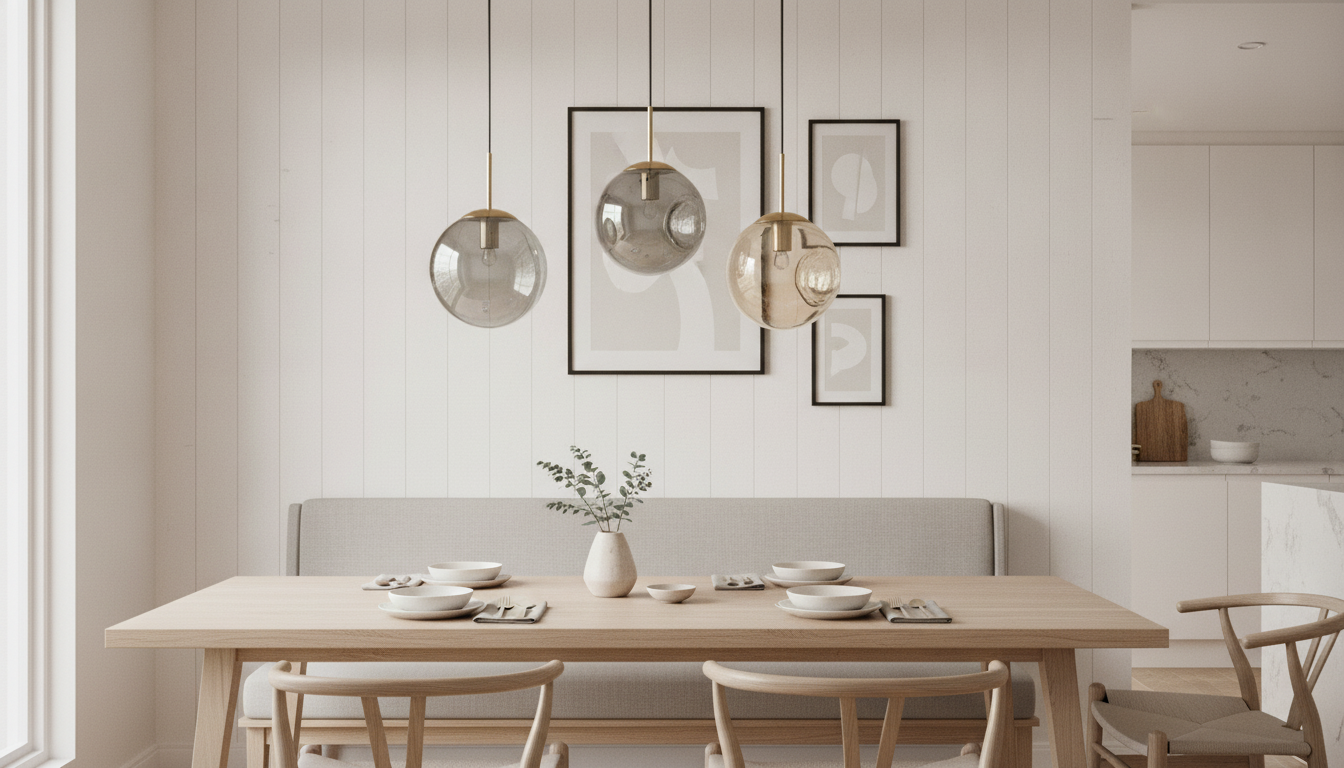
Nordic Glass Globe Pendant Light for Dining & Kitchen Spaces
A glass globe pendant brings calm, even illumination and a clean silhouette to dining tables and kitchen islands. This style pairs well with wood, stone, and matte finishes, while the rounded shade helps soften hard lines in modern layouts. The guide below covers placement, sizing, bulb choice, and styling so the light feels intentional—bright enough for meals and prep, warm enough for lingering conversations.
What a glass globe pendant adds to a room
A globe pendant is simple on paper, but it solves several everyday lighting problems in one move. First, the rounded glass shade helps diffuse light, softening the “spotlight” effect you can get from exposed bulbs. Second, the sphere brings balance: it visually complements the long rectangles of dining tables and kitchen islands without adding sharp angles or visual weight.
Because the shape is neutral, it also travels well across styles—Scandinavian, modern, Japandi, and transitional interiors all benefit from the clean outline. In open-plan layouts, a pendant does another job: it creates visual zoning. Even when the dining area flows into the kitchen and living space, a centered globe can define the “gathering” zone the way a rug does—only overhead.
Where it works best: dining tables, islands, and breakfast nooks
Over a dining table, a globe pendant reads as a centerpiece that doesn’t block conversation. For smaller round or square tables, one pendant centered usually feels composed. For longer rectangles, two or three pendants help keep the whole surface evenly lit, which matters when you’re serving, clearing plates, or setting out shared dishes.
Over a kitchen island, aim placement around how the island is used. A common misstep is centering pendants only on the island’s midpoint; instead, align them with the real working zones—prep area, sink, or seating line—so the light lands where hands and eyes actually are. For a breakfast nook, a single globe keeps the corner airy, and a slightly warmer bulb can make early mornings feel softer.
In open-concept spaces, matching finishes goes a long way. If nearby hardware is matte black, brass, or chrome, echoing that finish in the pendant helps the sightline feel intentional from room to room.
Sizing and spacing that looks intentional
Quick placement guide (starting points to adjust on-site)
| Location | Typical bottom-of-shade height | Spacing (multiple pendants) | Notes |
|---|---|---|---|
| Dining table | 28–34 in above tabletop | If 2–3 pendants: 24–30 in apart (center to center) | Aim for clear sightlines; raise slightly if guests frequently stand and move around the table. |
| Kitchen island | 30–36 in above countertop | 24–32 in apart (center to center) | Keep pendants centered over key work areas; avoid placing directly where tall appliances are stored. |
| Breakfast nook | 26–32 in above tabletop | Usually single pendant | Use warmer color temperature to keep the corner inviting. |
| Entry or corridor (as an accent) | At least 7 ft clearance from floor | Single pendant | Prioritize safe clearance; consider a smaller globe if the passage is narrow. |
Bulbs and light quality: warm, flattering, and practical
A dimmer switch is one of the simplest upgrades for daily life: turn the light up for prep and cleanup, then glide down into dinner ambience. Verify the bulb and fixture are compatible with your dimmer type. For energy-conscious choices and performance guidance, see ENERGY STAR lighting guidance and the U.S. Department of Energy’s LED overview.
Material and finish pairings for Nordic interiors
Installation notes and care
For electrical safety, use a qualified electrician if wiring is unfamiliar or if the ceiling box needs reinforcement. (General electrical safety references are available from InterNACHI.) Before committing to cord length, test the drop: painter’s tape or a temporary hook helps you confirm sightlines and spacing while standing, seated, and walking around the island.
A simple styling recipe for dining and kitchen scenes
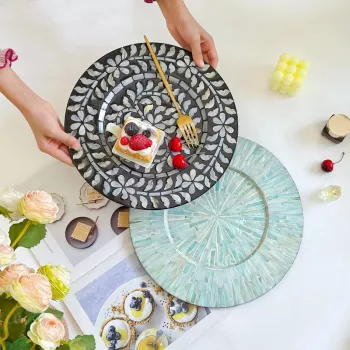
Glass can feel cool on its own, so layering textures helps: linen napkins, wood serving boards, and matte ceramics make the scene feel lived-in. For a quick finish that ties your lighting into the tablescape, consider a reflective accent that picks up the pendant’s glow, like the Luxury Iridescent Shell Placemats – Handmade Nordic Round Decorative Tray.
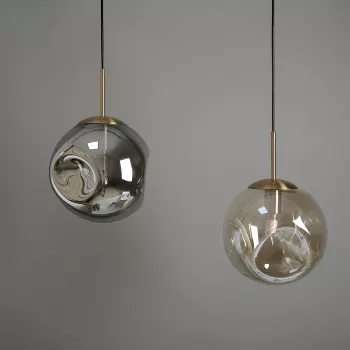
Product spotlight: Nordic Glass Globe Pendant Light
If you’re aiming for a clean, Nordic look over a dining table or island, the Nordic Glass Globe Pendant Light for Dining & Kitchen Spaces delivers a simple globe profile that suits both modern and transitional rooms. It pairs especially well with warm LED bulbs and a dimmer, giving you flexible lighting that can shift from bright prep mode to a softer dinner setting.
FAQ
How high should a globe pendant hang above a dining table or kitchen island?
As a practical starting point, hang the bottom of the shade about 28–34 inches above a dining tabletop and about 30–36 inches above a kitchen countertop. Adjust up if sightlines feel blocked when seated or if the globe is oversized, and adjust down slightly if the ceiling is tall and the fixture feels visually “detached.”
What bulb color looks best in a glass globe pendant for dining?
Most dining spaces look best with warm light in the 2700K–3000K range. If you want a slightly crisper feel for kitchen tasks, 3000K is a comfortable middle ground, and a dimmer helps you fine-tune the mood at night.
Will a clear glass globe cause glare?
Clear glass can show the bulb directly, which may create glare at certain angles. Using a frosted or lower-glare LED filament bulb and pairing the fixture with a dimmer typically reduces harsh brightness while keeping the globe’s clean, transparent look.









Leave a comment