Break the Nighttime Scroll: A 7-Night Phone Reset
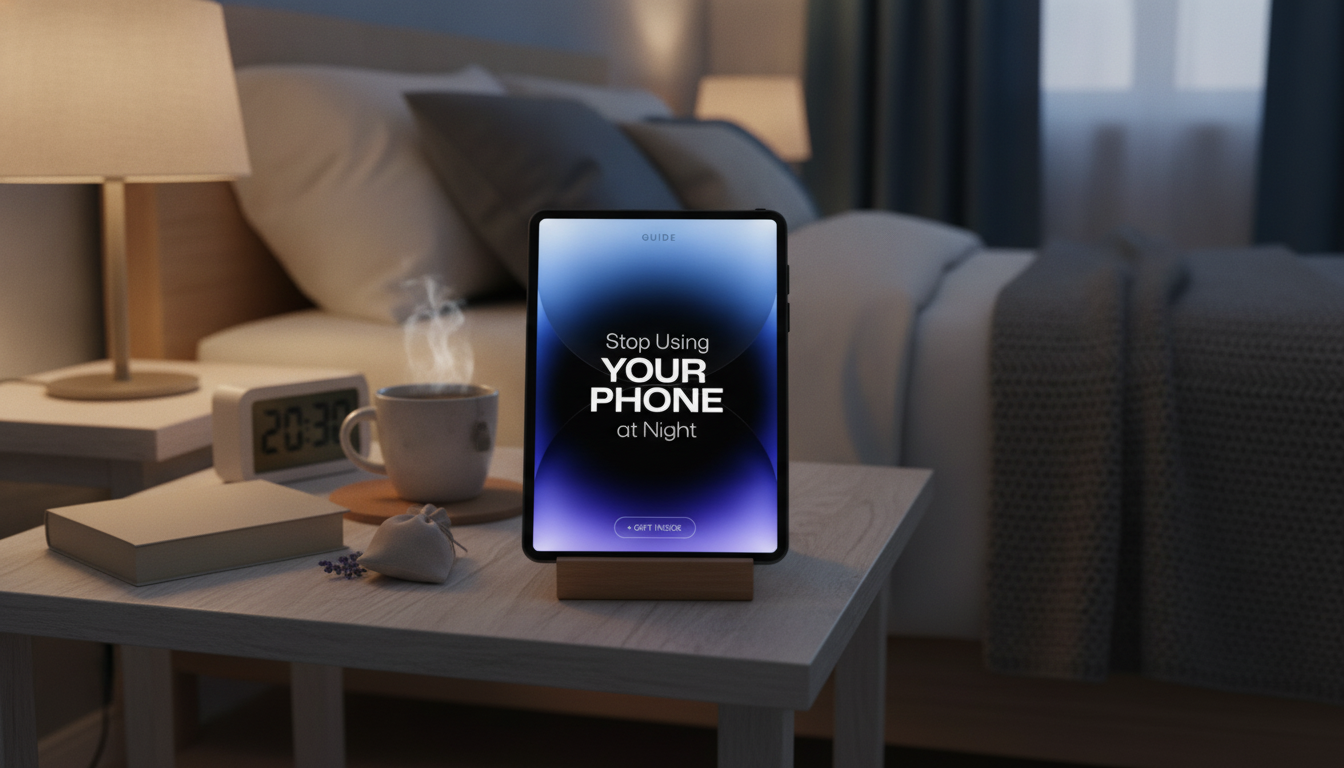
Stop Using Your Phone at Night: A Step-by-Step Guide to Prevent Smartphone Overuse and Sleep Disruptions
Nighttime phone habits can quietly steal sleep through alertness, scrolling loops, and late-night notifications. The good news: a few practical changes to your environment, your settings, and a simple wind-down routine can reduce the urge to check your phone—without relying on willpower alone. The goal isn’t perfection; it’s building a bedtime setup where the easiest choice is also the healthiest one.
Why nighttime phone use is so hard to stop
Most late-night phone use isn’t a “discipline problem.” It’s a predictable outcome of how phones are designed and how the brain learns habits.
- Endless-feed design rewards “just one more” with novelty and variable rewards, which can keep you engaged longer than intended.
- Bright light and stimulating content can push sleep later by increasing alertness and interfering with the natural wind-down process. For more on light exposure, see Harvard Health Publishing — Blue light and sleep.
- Notifications create urgency, training your brain to stay “on-call” even when you’re trying to rest.
- Bed becomes linked with scrolling instead of sleep, which can make falling asleep harder over time as your brain associates bedtime with stimulation.
A simple 7-night reset plan (step by step)
This reset is intentionally small and progressive. Each step makes the next one easier, so you don’t have to overhaul everything on Night 1.
| Night | Change to Make | Goal |
|---|---|---|
| 1 | Set a nightly phone stop time | Create a predictable boundary |
| 2 | Move charging location away from bed | Reduce automatic pickup |
| 3 | Disable non-essential notifications | Stop attention hijacks |
| 4 | Add a replacement wind-down activity | Fill the habit gap |
| 5 | Enable focus mode + app limits | Add friction to scrolling |
| 6 | Simplify the home screen (remove social/video apps) | Reduce cues |
| 7 | Lock in a permanent routine + weekend plan | Maintain consistency |
Night 1–2: Create a clear stop time and move the charger
- Pick a stop time 30–60 minutes before bed and keep it consistent for two nights. Consistency trains your brain faster than a perfect schedule.
- Choose a charging spot outside the bedroom (ideal) or at least across the room. Distance adds just enough friction to interrupt autopilot.
Night 3–4: Cut interruptions and replace the last-scroll habit
Night 5–7: Add friction and plan for high-stress nights
Set up the phone so willpower is not required
If you want a structured, guided approach that walks through these changes step by step, consider Stop Using Your Phone at Night: A Step-by-Step Guide to Prevent Smartphone Overuse and Sleep Disruptions.
Build a wind-down routine that makes the phone feel unnecessary
| Time | Action | Why it helps |
|---|---|---|
| T-60 min | Set phone to Sleep Focus and place it to charge away from bed | Removes cues and interruptions |
| T-45 min | Dim lights; stop work-like tasks | Signals the body to wind down |
| T-30 min | Brain dump + set tomorrow’s top 3 | Reduces rumination |
| T-20 min | Calm activity (read, stretch, breathe) | Replaces scrolling with relaxation |
| Bedtime | Bedroom is for sleep only (no feeds) | Strengthens sleep association |
Make the bedroom a low-distraction sleep space
- Keep the phone out of reach, ideally outside the room. If it must stay in the room, place it across the room.
- Reduce light exposure with warm bulbs and dim lamps; avoid bright overhead lighting close to bedtime. Additional background: National Sleep Foundation — How Blue Light Affects Sleep.
- Keep a notepad by the bed for late thoughts so you don’t “need” the phone to remember things.
- If sharing a room, agree on a shared quiet window and a common charging area.
- If noise is a trigger, consider a dedicated sound machine or offline audio device rather than the phone.
Handle common setbacks without restarting from zero
For an easy, screen-free wind-down option that keeps your hands busy, try the DIY Wooden Bloom Box 3D Puzzle Kit. If bedtime procrastination is fueled by “one more task” stress, simplifying evening prep can also help—something like the Portable Handheld Fabric Steamer can reduce last-minute scrambling for clothes the next day.
A guided option for staying consistent
- Use nightly prompts and simple tracking (stop time, charging location, routine done/not done) to stay honest without overthinking.
- Look for clear actions: a stop-time boundary, a settings checklist, replacement routines, and a plan for setbacks.
- Keep expectations realistic: reducing nighttime use is often gradual, not a one-night transformation. For broader sleep health guidance, visit CDC — Sleep and Sleep Disorders.
If you prefer a structured plan that ties everything together, Stop Using Your Phone at Night: A Step-by-Step Guide to Prevent Smartphone Overuse and Sleep Disruptions is a practical, step-by-step option designed for real life—work nights, weekends, and high-stress evenings included.
FAQ
How long before bed should the phone be put away?
A practical target is 30–60 minutes before bedtime. If that feels like too much at first, start with 15–20 minutes for a few nights and gradually extend the buffer—consistency matters more than perfection.
What if the phone is needed as an alarm or for emergencies?
Use an alarm clock or a dedicated bedside device if possible. If you need your phone available, keep it across the room and allow calls from key contacts while silencing everything else.
Why does scrolling at night make it harder to fall asleep even when tired?
Scrolling keeps the brain alert with novelty, emotion, and bright light, which can delay the shift into sleep. Replacing the last scroll with a low-stimulation routine (dim lights, brain dump, and a calm activity) helps break the loop.















Leave a comment