1000W Power Station TV Runtime: Quick Wh Math
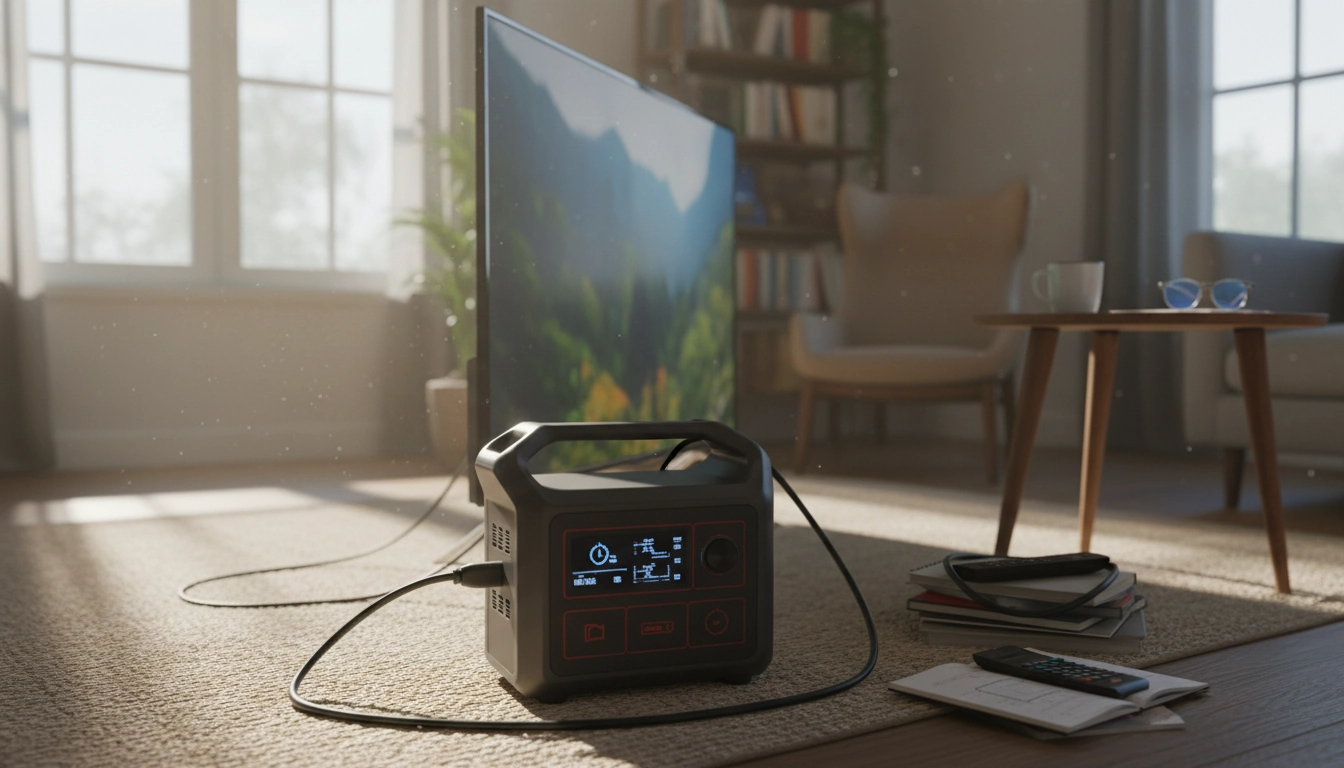
How long will a 1000 watt power station run a TV?
It depends on two things: the TV’s actual watt draw and the power station’s usable battery capacity. Even if a unit is marketed as “1000W,” that number usually describes how much power it can deliver at once (output), not how much energy it stores (capacity). Runtime comes from watt-hours (Wh).
To estimate: Runtime (hours) = Power station capacity (Wh) × 0.85 ÷ TV watts. The 0.85 factor accounts for typical conversion losses from the inverter and power electronics.
Quick runtime examples
If your power station has about 1000Wh of capacity:
• 50W LED TV: ~1000 × 0.85 ÷ 50 ≈ 17 hours
• 100W TV: ~8.5 hours
• 150W TV: ~5.7 hours
• 200W TV: ~4.25 hours
Older plasma TVs and very large screens can draw 250–400W (or more), which can cut runtime to roughly 2–3.5 hours on a ~1000Wh battery. Also note that streaming boxes, soundbars, and game consoles add additional watts.
How to get a more accurate estimate
Check the TV label for watts, or use a plug-in power meter to measure real-world draw while watching your normal content. Then find your power station’s capacity in Wh (often listed on the product page or manual). If it’s a smaller-capacity model with fast charging, it may run a TV for fewer hours but can be topped up quickly between uses.
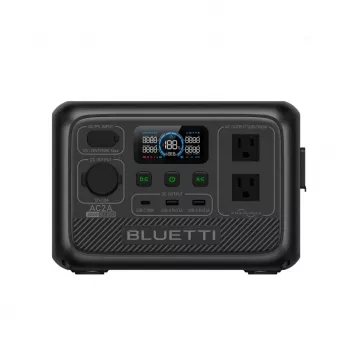
For a practical look at a compact option and how charging affects real usage time, see this guide: portable solar power station fast-charging guide.
For 1000W Power Station TV Runtime: Quick Wh Math, the best answer depends on fit, material, care instructions, and how the product will be used day to day.
Checking those details first helps avoid a poor match and keeps the choice practical after delivery.
FAQ
Can you run a refrigerator on a 1000W power station?
Often yes for short periods, but it depends on the fridge’s starting surge and the station’s surge rating. Many fridges run 100–200W but can briefly surge much higher when the compressor starts.














Leave a comment