Real Branches for a Cat Tree: Safe Wood & Prep Tips
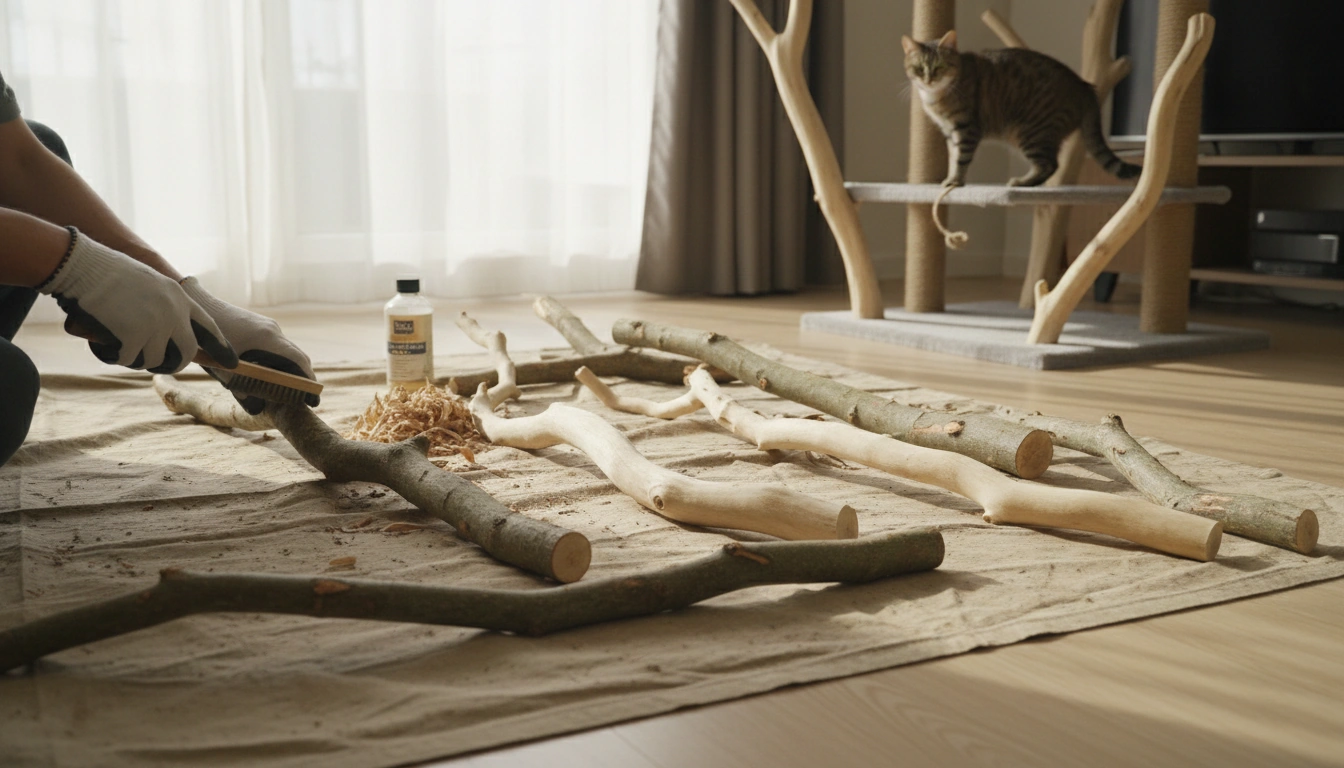
Can I use real branches for a cat tree?
Yes—real branches can work for a cat tree, but only if you choose safe wood, prep it correctly, and build for stability. Cats climb, scratch, and launch off platforms, so a natural-wood DIY needs to be sturdier than it looks.
How to choose safe branches
Start with hardwood branches that are solid, dry, and free of rot, mold, or soft spots. Avoid any wood that smells musty, flakes easily, or has visible fungus. Skip branches from trees that have been treated with pesticides or herbicides, and don’t use driftwood or random found wood unless you know its history and can fully sanitize it.
Look for pieces thick enough to resist flexing. A wobbly trunk can turn into a tipping hazard once your cat starts jumping. Also avoid branches with sharp broken ends or splinters that can snag paw pads.
How to clean and prep real branches
Remove loose bark, then scrub with hot, soapy water and rinse thoroughly. Let the wood dry completely—rushing this step can trap moisture and lead to mold later. Sand the surface to reduce splinters and rough edges, especially where your cat will grip or rub.
For extra durability, many builders wrap high-traffic areas with sisal rope so cats can scratch without shredding the wood. If you seal the wood, use a fully cured, pet-safe finish and allow ample drying time in a well-ventilated space before bringing it indoors.
Build it for stability (not just looks)
Anchor the branch to a heavy base and test for tipping from multiple directions. Keep platforms at practical heights, and avoid narrow perches that can spin or shift. If your goal is a compact, indoor-friendly setup with reliable scratch surfaces, a purpose-built model can be easier to maintain and safer day-to-day. For a space-smart option with a dedicated scratcher and play area, see this guide: https://enamorica.com/guide-compact-cat-tree-sisal-scratcher-play-area-indoor-cats/.
FAQ
What kind of rope is best for wrapping a cat tree?
Natural sisal rope is the most common choice because it’s tough, textured for scratching, and generally holds up well. Choose an untreated, low-odor sisal and wrap it tightly to prevent gaps that can catch claws.













Leave a comment