Freelance Pitch Template: Win Clients in 5 Steps
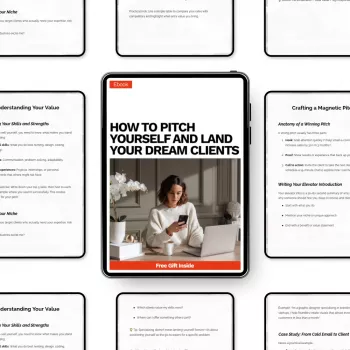
How do you pitch yourself as a freelancer?
A strong freelance pitch is a short, client-focused message that proves three things fast: you understand the problem, you’ve solved something similar, and you can deliver a clear next step. Skip long bios and lead with outcomes the client cares about—speed, quality, revenue, reduced workload, or fewer mistakes.
1) Start with a sharp opener that matches their need
Use one sentence that mirrors their goal or pain point. For example: “Noticed your product pages don’t consistently highlight benefits—happy to help tighten copy so shoppers convert faster.” This shows relevance immediately.
2) Position your service as a specific solution
Instead of listing everything you can do, name the exact deliverable you’ll provide. “I can rewrite your top 10 product descriptions with a consistent brand voice, clearer specs, and scannable bullets.” Specifics reduce risk and make it easier to say yes.
3) Prove it with a compact credibility snippet
Add one proof point: a metric, a recognizable type of client, or a small win. Example: “Recently improved checkout email clicks by 18% for an online retailer.” If you don’t have metrics, mention a relevant sample and the approach you used.
4) Offer a simple plan and timeline
Outline the process in 2–3 steps and include timing. “Quick kickoff call, one draft within 48 hours, one revision round, then final files.” A lightweight plan makes you feel organized and dependable.
5) Close with an easy call to action
Ask a low-friction question: “Want me to send a 3-point audit of one page first?” or “Is there a deadline you’re working toward?” Keep it about their next move, not yours.
For more examples and deeper guidance, visit this complete guide on pitching yourself as a freelancer.
FAQ
How do you follow up on a freelance pitch without sounding pushy?
Send a brief check-in that adds value, such as a quick observation or a clarifying question about their timeline. Keep it polite, assume they’re busy, and offer an easy “yes/no” next step.













Leave a comment